Call Us Urgent 24/7
9726531129Only used in cases of accidents,
illnesses, etc. that are not life-threatening
For more serious problems
please call 9726531129.
501-503 A, Shridhar Athens, Opp. Statue of Jhansi's Queen Laxmibai, Shivranjani, Ahmedabad – 380015, Gujarat, India
Call Us Urgent 24/7
9726531129Only used in cases of accidents,
illnesses, etc. that are not life-threatening
For more serious problems
please call 9726531129.
501-503 A, Shridhar Athens, Opp. Statue of Jhansi's Queen Laxmibai, Shivranjani, Ahmedabad – 380015, Gujarat, India

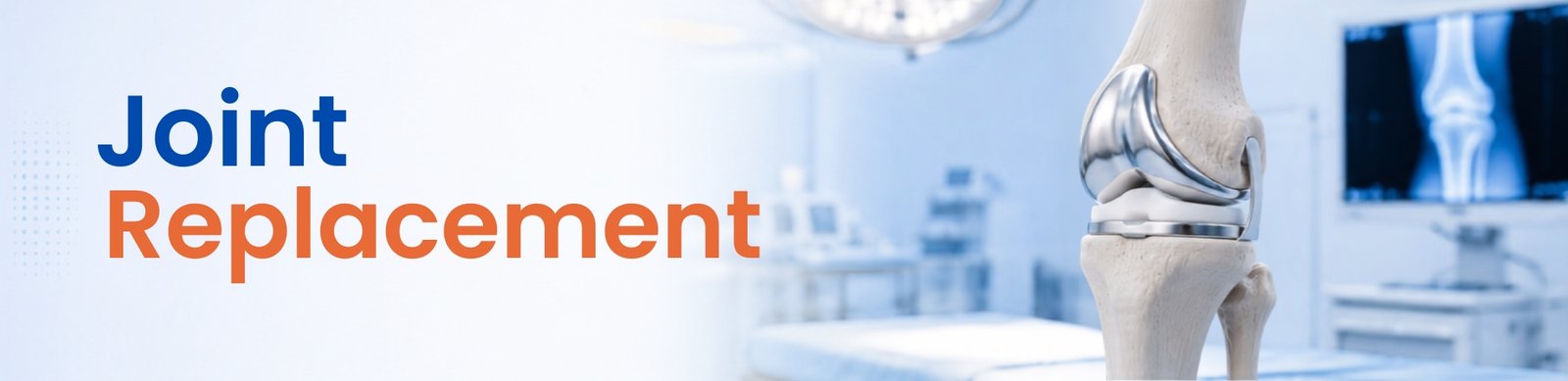
Advanced Joint Replacement for Pain-Free Movement
At DVM Hospital, we offer comprehensive Joint Replacement Surgery for patients suffering from severe arthritis, joint degeneration, sports injuries, and traumatic joint damage. Under the expert care of Dr. Vijal Modi, we combine advanced surgical expertise with modern implant technology to restore mobility, reduce pain, and improve your quality of life.
Whether you require total knee replacement, hip replacement, shoulder replacement, or revision joint surgery, our team develops personalized treatment plans based on your condition, lifestyle, and recovery goals. Every procedure is performed using internationally accepted techniques to ensure maximum precision and long-term success.
Our patient-centered approach includes detailed diagnosis, minimally invasive surgical options whenever possible, advanced pain management, and structured physiotherapy to help you recover faster and return to your daily activities with confidence.
Our Approach to Trauma Surgery
At DVM Hospital, our Joint Replacement Department is committed to providing advanced, patient-focused care for individuals suffering from severe joint pain, arthritis, joint degeneration, and injury-related conditions. Led by Dr. Vijal Modi, we combine modern surgical techniques, premium-quality implants, and personalized treatment plans to restore mobility, reduce pain, and improve your overall quality of life.
Every patient undergoes a comprehensive clinical evaluation supported by advanced diagnostic imaging to determine the most suitable treatment approach. Depending on your condition, treatment may include minimally invasive joint replacement surgery, robotic-assisted techniques where appropriate, pain management, and a structured rehabilitation program designed for faster recovery.
Whether you require knee replacement, hip replacement, shoulder replacement, or revision joint surgery, our experienced orthopaedic team is dedicated to delivering safe, effective, and long-lasting outcomes through compassionate care and continuous follow-up.
Why Choose Our Trauma Surgery?
At DVM Hospital, we are committed to delivering world-class joint replacement care using internationally accepted surgical techniques, advanced implant technology, and evidence-based treatment protocols. Our goal is not only to relieve pain but also to restore joint function, improve mobility, and help you return to an active, independent lifestyle.
From your first consultation through surgery and post-operative rehabilitation, our multidisciplinary team provides personalized care at every stage of your recovery. With modern operation theatres, experienced orthopaedic specialists, comprehensive physiotherapy, and patient-centered support, we help you recover faster, regain confidence, and enjoy long-term joint health.
Patient-Centered Care
Every joint replacement journey is unique. Our orthopaedic specialists create personalized treatment plans based on your condition, lifestyle, and recovery goals. We provide compassionate care, continuous guidance, and dedicated support from consultation through complete rehabilitation.
Advanced Rehabilitation
We utilize advanced diagnostic imaging, minimally invasive surgical techniques, and premium-quality joint implants to perform knee, hip, and shoulder replacement procedures. Our evidence-based approach restores joint function, reduces pain, and helps ensure long-lasting outcomes.
Faster Recovery
Our comprehensive rehabilitation program combines physiotherapy, strength training, mobility exercises, and personalized recovery plans to help you heal safely. Through continuous monitoring and expert follow-up care, we help you regain confidence and return to your daily activities as quickly as possible.
Our Areas of Trauma Surgery Expertise
At DVM Hospital, our Joint Replacement Department provides comprehensive care for patients experiencing chronic joint pain, arthritis, sports injuries, and degenerative joint conditions. Under the expert guidance of Dr. Vijal Modi, we utilize advanced surgical techniques, premium-quality implants, and personalized rehabilitation programs to restore mobility and improve long-term joint health.
From diagnosis and treatment planning to surgery and post-operative rehabilitation, our multidisciplinary team is committed to helping every patient regain comfort, strength, and confidence while returning to an active lifestyle.
Our Treatment Process
At DVM Hospital, we follow a comprehensive and patient-centered approach to Joint Replacement Surgery, ensuring every patient receives accurate diagnosis, advanced surgical care, and personalized rehabilitation. From your initial consultation to complete recovery, our dedicated orthopaedic team is committed to relieving pain, restoring mobility, and helping you return to an active lifestyle.
Each treatment plan is customized based on your joint condition, age, activity level, and lifestyle goals. Using advanced diagnostic imaging, premium-quality implants, minimally invasive surgical techniques, and structured rehabilitation, we deliver safe, effective, and long-lasting outcomes.
Comprehensive Assessment & Joint Evaluation
Personalized Joint Replacement Plan
Advanced Joint Replacement Surgery
Rehabilitation & Long-Term Recovery
Are you having health problems? Contact us today!
Address Business
Contact With Us
Call Us 24/7: + 919726531129
Partial Knee Replacement
A targeted, less invasive alternative to total knee replacement for patients with damage limited to one part of the joint.
Replacing Only What's Damaged
Partial knee replacement (unicompartmental knee arthroplasty) replaces only the damaged compartment of the knee — medial, lateral, or patellofemoral — while preserving healthy bone, cartilage, and ligaments. This results in a smaller incision, faster recovery, and a more natural-feeling joint compared to total knee replacement.
- ✓ Preserves healthy bone and ligament tissue
- ✓ Smaller incision than total knee replacement
- ✓ Faster recovery and more natural joint feel
- ✓ Can be converted to total replacement later if needed
Quick Facts
• Also known as unicompartmental knee replacement
• Typically a 1–2 hour outpatient or short-stay procedure
• Most effective for single-compartment arthritis
• Preserves the ACL and surrounding healthy tissue
Is Partial Knee Replacement Right for You?
This procedure is best suited to patients with damage confined to one area of the knee.
Single-Compartment Arthritis
Cartilage wear limited to the inner, outer, or kneecap compartment rather than the entire joint.
Stable, Healthy Ligaments
An intact ACL and stable surrounding ligaments are required for a good outcome.
Good Range of Motion
Candidates typically retain reasonable knee flexion and minimal deformity.
Failed Conservative Treatment
Pain persists despite medication, injections, or physical therapy.
Active, Health-Conscious Patients
Those who want a faster return to daily activity than total replacement allows.
Not Significantly Overweight
Lower body weight tends to improve implant longevity and surgical outcomes.
Why Choose Partial Over Total Replacement
A less invasive option that preserves more of your natural knee.
Smaller Incision
A more targeted surgical approach means less tissue disruption overall.
Faster Recovery
Most patients walk the same day and recover significantly faster than with total replacement.
More Natural Movement
Preserving healthy ligaments helps the knee feel and move more like its own.
Less Blood Loss
The smaller surgical field typically results in reduced blood loss during surgery.
Shorter Hospital Stay
Many patients go home the same day or after just one night.
Option to Upgrade Later
If needed, a partial replacement can later be converted to a total knee replacement.
How Partial Knee Replacement Is Performed
Using a smaller incision than total knee replacement, the surgeon removes only the damaged cartilage and bone from the affected compartment and replaces it with a precisely fitted implant.
- Performed under regional or general anesthesia
- Small incision made over the affected compartment
- Damaged cartilage and bone surface removed
- Metal and plastic implant components fitted and secured
- Knee tested for movement and alignment before closing
What to Expect After Surgery
Recovery is typically faster than total knee replacement, with most patients back to daily activity within weeks.
Walking Begins
Most patients stand and walk with assistance the same day or the day after surgery.
Early Rehabilitation
Physical therapy starts to restore range of motion and reduce swelling.
Strength Building
Most patients walk without support and resume light daily activities.
Return to Normal Activity
Many patients resume driving, work, and low-impact exercise during this stage.
Full Recovery
Continued strengthening leads to full functional recovery and long-term joint use.
Partial Knee Replacement — Common Questions
Answers to what patients most often ask about this procedure.
Partial replacement only replaces the damaged compartment of the knee, preserving healthy bone and ligaments, while total replacement resurfaces the entire joint.
Candidacy depends more on the extent and location of joint damage than age alone, though it's most commonly performed in patients with single-compartment arthritis.
Modern implants often last 15–20 years or longer, though longevity depends on activity level, weight, and overall joint health.
Yes, structured physical therapy is an important part of recovery to restore strength, motion, and stability in the knee.
Many patients go home the same day or after one night, which is shorter than the typical stay for total knee replacement.
Yes, if arthritis progresses to other compartments in the future, the partial replacement can be revised to a total knee replacement.
Generally yes — the smaller incision and preserved tissue typically lead to less pain, shorter hospital stays, and quicker return to activity.
Most patients return to walking, swimming, cycling, and other low-impact activities; high-impact sports are generally discouraged to protect the implant.
Risks include infection, blood clots, implant wear, or progression of arthritis in other compartments — your surgeon will review these based on your case.
Imaging and a physical evaluation will determine how much of the knee is damaged, which guides whether a partial or total replacement is more appropriate.

🏥 Need medical assistance?
Our team is here to help you with:
✅ Doctor Appointments
✅ Consultation Fees
✅ Treatment Information
✅ Emergency Assistance
Click below to chat with us on WhatsApp.